JORDAN ZAYAS KELLY
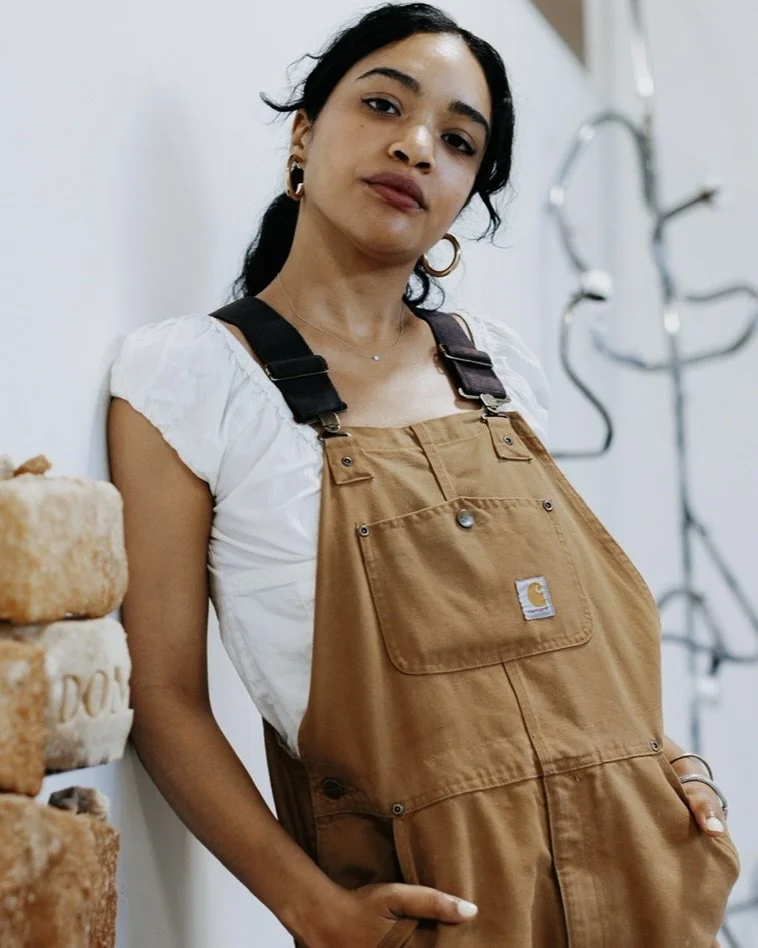
JORDAN ZAYAS KELLY (b. 1997 Baltimore, US) is an interdisciplinary artist working between New York and London. Her practice spans experimental video, sculpture, sound installation, and prose, exploring the intersections of identity, material history, and archival memory.
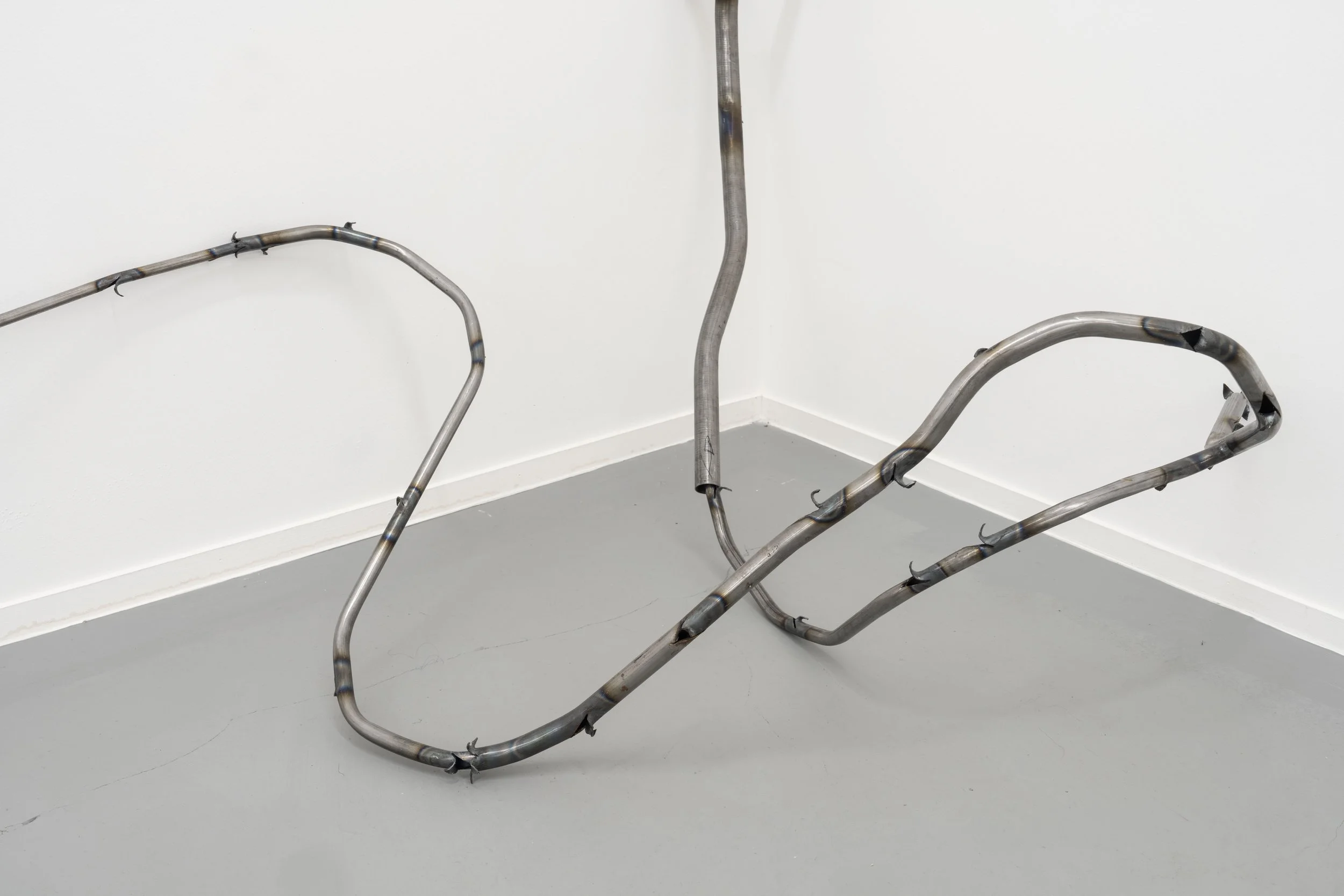
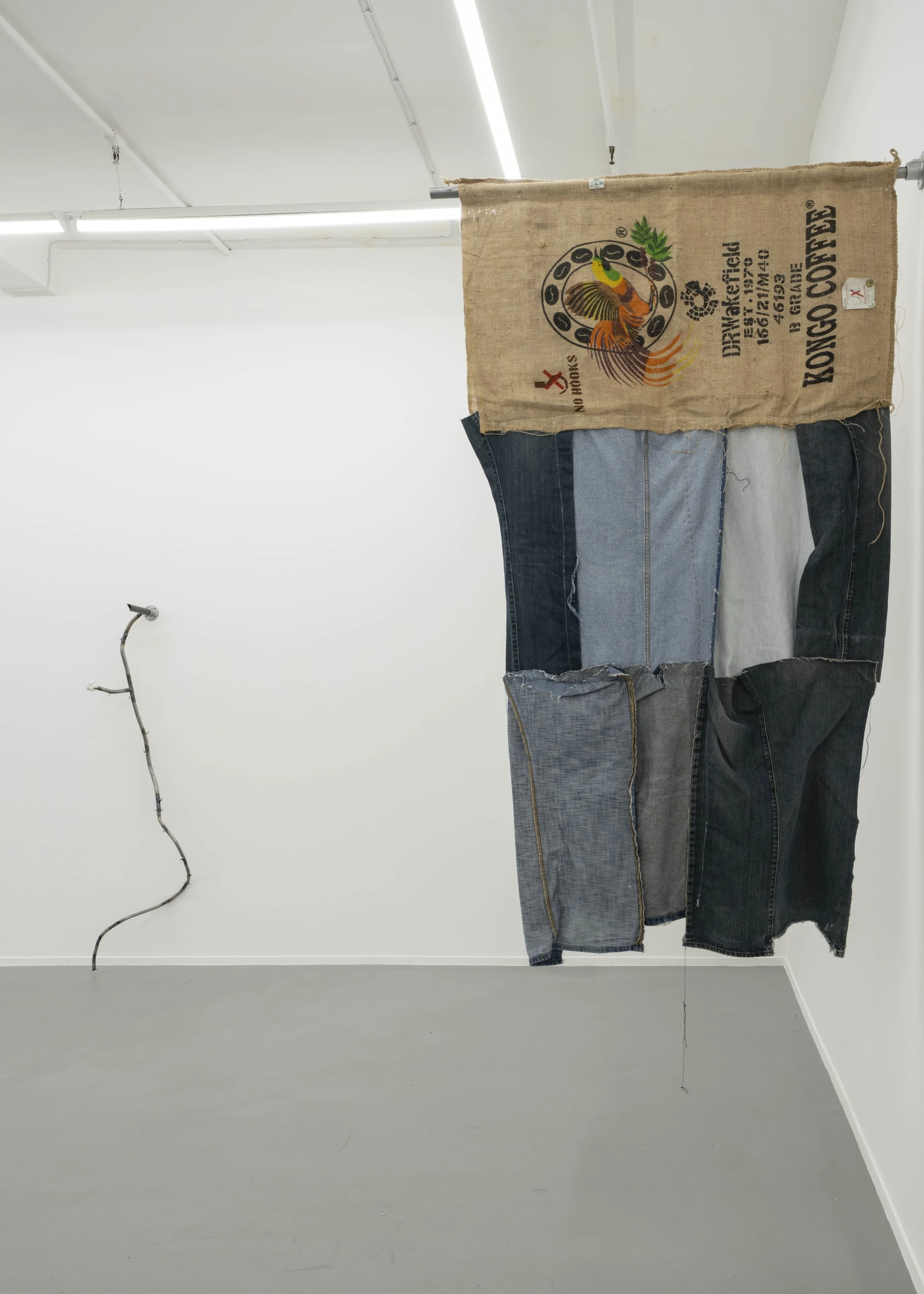
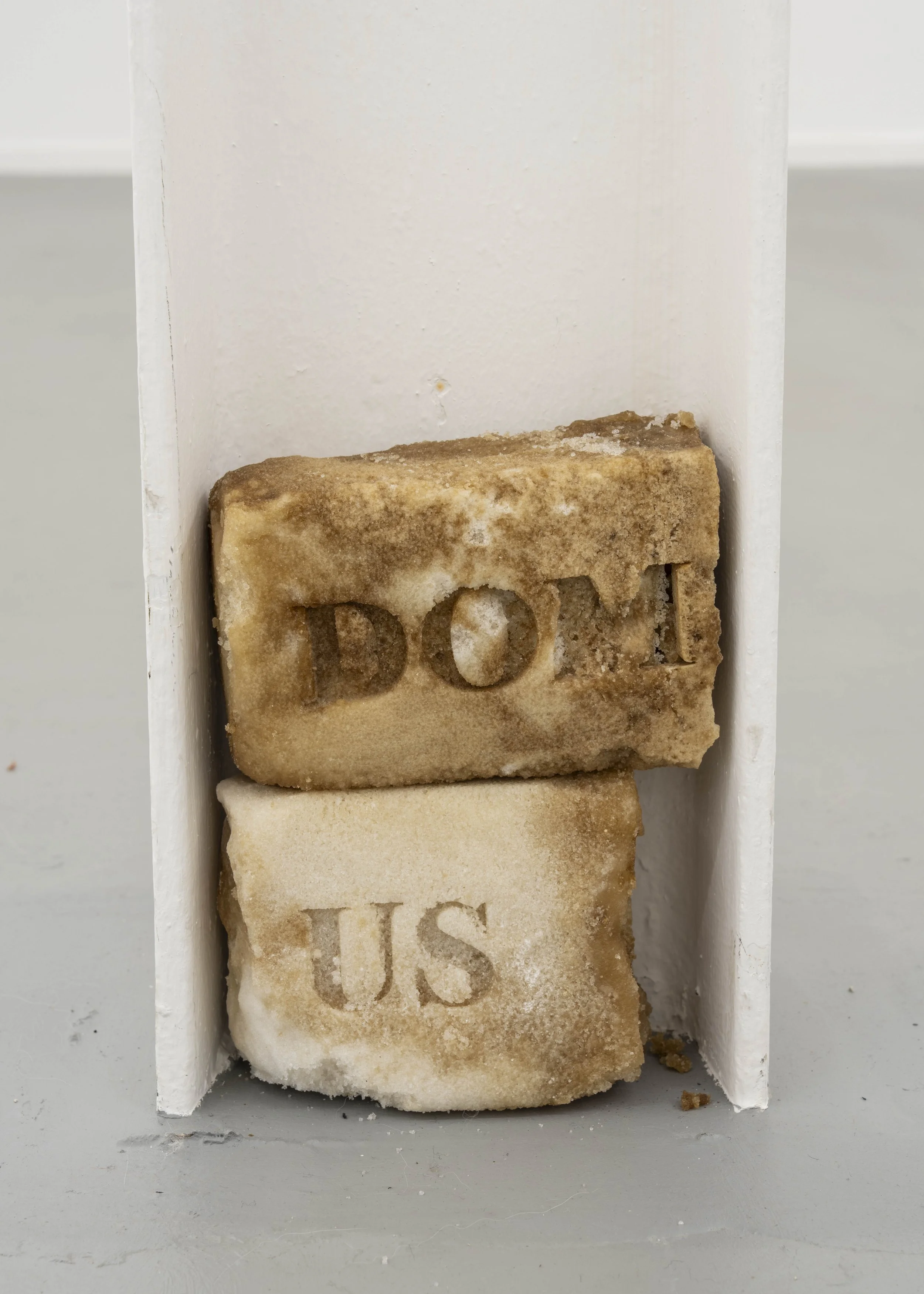
Through tactile engagements with archive and embodied experience, she transforms materials into a method of reclaiming histories that resist traditional documentation. Her current work employs historically exploited materials such as sugar, denim, raw cotton, and steel, reimagining these elements as aesthetic interventions that interrogate their extractive origins.
Grounded in Visual Art and African American and African Diaspora Studies, Kelly’s practice reframes traditions often rendered invisible by institutional narratives, drawing attention to the quotidian gestures that refuse conventional modes of representation. Her work recalls the personal with the understanding that what is personal is inherently political.
Jordan Zayas Kelly lives and works in London, UK. She earned a BA in African American and African Diaspora Studies and Visual Art from Columbia University in 2022, and an MA in Sculpture from the Royal College of Art, London, UK in 2025. She is a recipient of the Gilbert Bayes Trust Award (Royal College of Art, 2025) and the Barbara and Carl Zydney Grant for Artists with Disabilities (NYFA, 2021). Her work has been featured in group exhibitions internationally, including in Los Angeles, London, and New York, with presentations at London Fashion Week. Her work has also appeared in publications such as Vogue, Office Magazine, and Flash Art.
PLUPERFECT
Thursday 21 May – Saturday 18 July 2026
Pluperfect: a past perfect tense of what had already happened before the story begins. It presumes a prior perfection. But was there ever a perfect—and if so, for whom? The grammar, like the history, tells on itself.
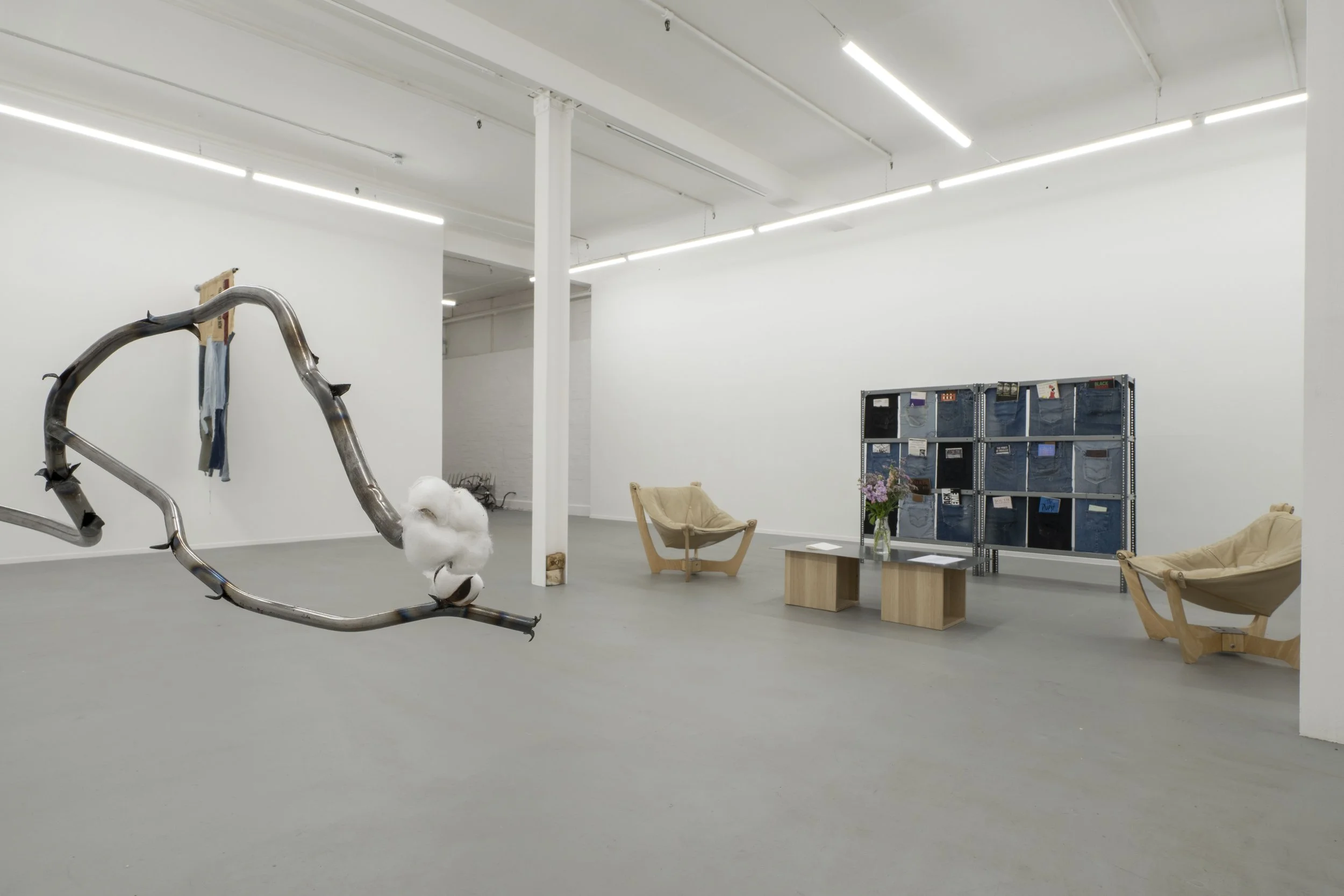
Pocket Book[s] began as thirteen works, in response to the grief of the current American administration being elected into office and in conversation with the 13th Amendment, whose exception clause preserved involuntary servitude as punishment for crime. Denim, the fabric of that forced labor, becomes here a site of reversal. This iteration of Pocket Book[s] you see here in Pluperfect are a counter to the recent ruling and gutting of the Voting Rights Act of 1965. Each pocket holds texts by Afro-diasporic artists, writers, and theorists, hand-selected and sewn into the work. The denim carries a labor history in its fabric, from cotton fields through mill towns into the global garment industry and back again. Workwear. Evidentiary ephemera. The pocket carries what we have always carried on our person. The books carry what has always already been known, argued, built, before anyone thought to credit it. That is the pluperfect. The series embodies an ethos of experimentation and reassembly, transforming salvaged denim into participatory sculptural paintings that function as a living archive.The books carry what has always already been known, argued, built, before anyone thought to credit it. That is the pluperfect. The knowledge was already there.
On April 29, 2026, the Supreme Court issued a 6 to 3 ruling in Louisiana v. Callais, effectively dismantling central provisions of the Voting Rights Act of 1965. It is the catalyst. The citation point. The site through which Kelly thinks and critiques the underbelly of pervasive Western patrilineal fictions.The 6–3 ruling unraveled central provisions of voters' rights, one of the most hard-won expansions of democratic participation in American history, forged largely through the labor, organizing, and revolutionary thought of Black and Afro-diasporic communities. Thinking through these discrepancies and revisionist patternings, Kelly expands visual languages and shorthands that expose such falsehoods through what she calls 'historically charged materials’: steel, denim, and sugar. Materials embedded within extraction, industry, abjection, and circulation. Each carrying the residue of Afro-diasporic and labor histories.This moment does not emerge in isolation, but in response to book bans, defunded libraries, and the quiet, sustained effort to render certain histories, certain communities, and certain rights illegible. Corroding liberties now rendered inaccessible.
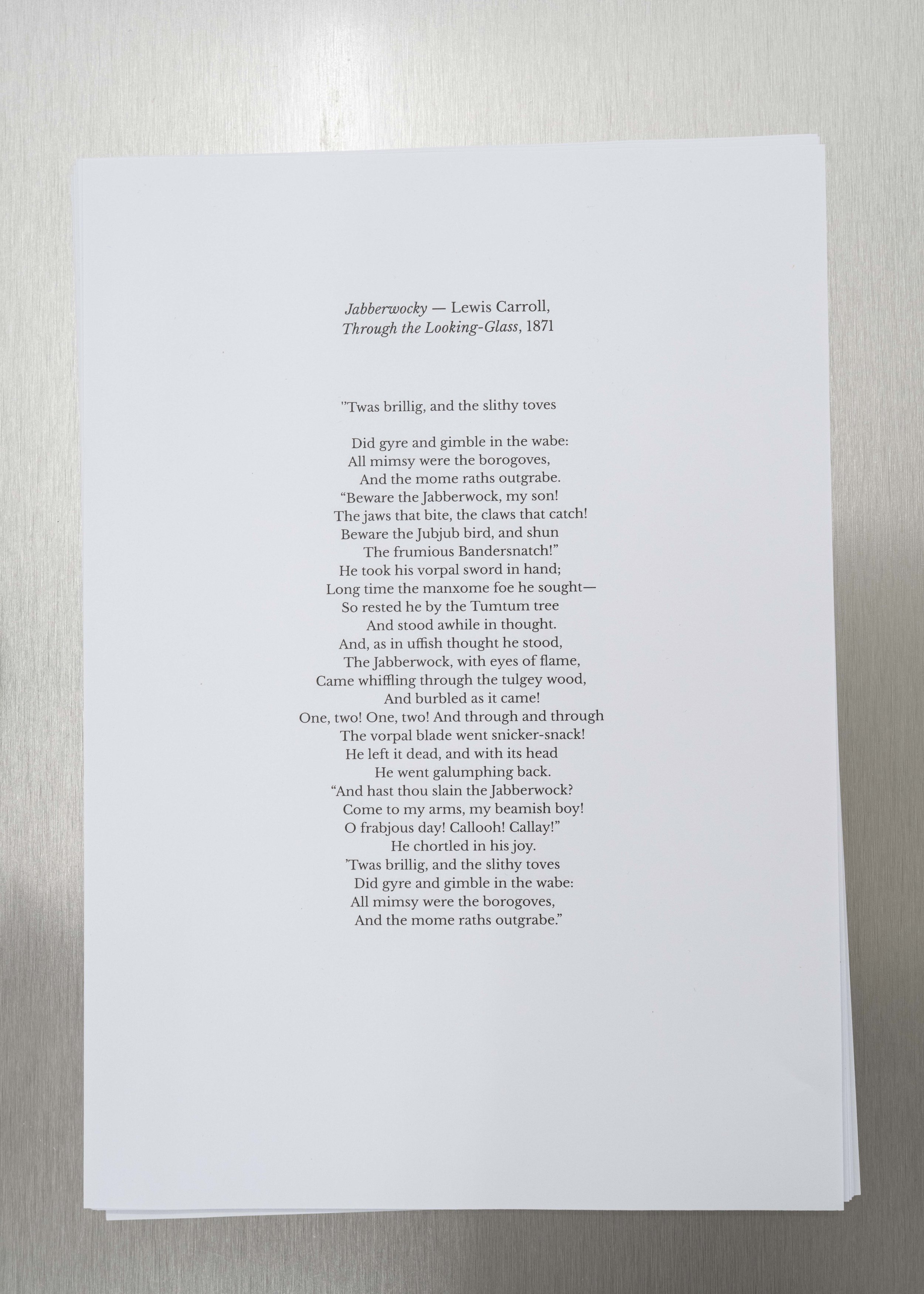
The myth/mythology of Make America Great Again™ is a tale just as Carroll's Jabberwocky: a monster conjured. What is trademarked, broadcast, is what lies at the surface. The gilded part. The Gilded Age, that period Trump has openly cited as the model for his golden return, and runs parallel almost exactly to the Reconstruction era, the terror are the same period. The gold and the nadir are the same age.
What cannot be trademarked is the interior work. What gets broadcast is the slogan, the spectacle, the hat. What is cut, omitted, and redacted, always, is the part that actually transforms. The change that happens in the mind. The knowledge that moves from pocket to hand to person, without permission and without an audience. Not the televised version. The live one. The lived present.
Black women have been the consistent catalyst, the organizational backbone, the bodies at the polls when others remain passive and tethered to screens, waiting and watching for tallied votes to come in. That pattern is documented, celebrated, and repeated without redistribution of credit, power, or resources. The way forward that relies on that cyclical refrain is no way forward. Pluperfect posits everyone else to do the reading. To reach for what exists. To honor the labor already done rather than putting it back to work.
The Pocket Book[s] holds everything but the body. Deliberately. Pockets, usually reserved for loose change and lost gum wrappers, are now the site for literal change. What preoccupies you here, and what you carry away, is of your own accord. The body is absent. The bodies, contingent and present, complete it.
Visitors are invited to engage the books, sit, read, and return them. The gallery becomes a circulating library, a reading room, a counter-archive. At a time when books, libraries, education, and art are increasingly under threat of censorship, Pocket Book[s] offers an alternative: a space for learning, remembering, and honoring those that have and continue to move us forward. These selected titles become marginalia. A pseudo-epilogue: The books → The denim → The shorthand for Pocket Book[s] → The things we carry, what's on our person → The wordplay.
Through *this looking glass, the monster has a name, and it is in the makings of America.
The past, Pluperfect, instructs: beware while the present begs to be read.






![Jordan Zayas Kelly, Pocket Book[s] (Pluperfect), 2026. Salvaged denim, books and steel shelving, 201 x 152 x 31 cm. Courtesy of the Artist and Loop, London. Photo_ Noah Da Costa(1).jpg](https://images.squarespace-cdn.com/content/v1/67cf135eeb7ae15929952823/0f742d41-e6e5-4c37-980e-2dcd33d11d24/Jordan+Zayas+Kelly%2C+Pocket+Book%5Bs%5D+%28Pluperfect%29%2C+2026.+Salvaged+denim%2C+books+and+steel+shelving%2C+201+x+152+x+31+cm.+Courtesy+of+the+Artist+and+Loop%2C+London.+Photo_+Noah+Da+Costa%281%29.jpg)


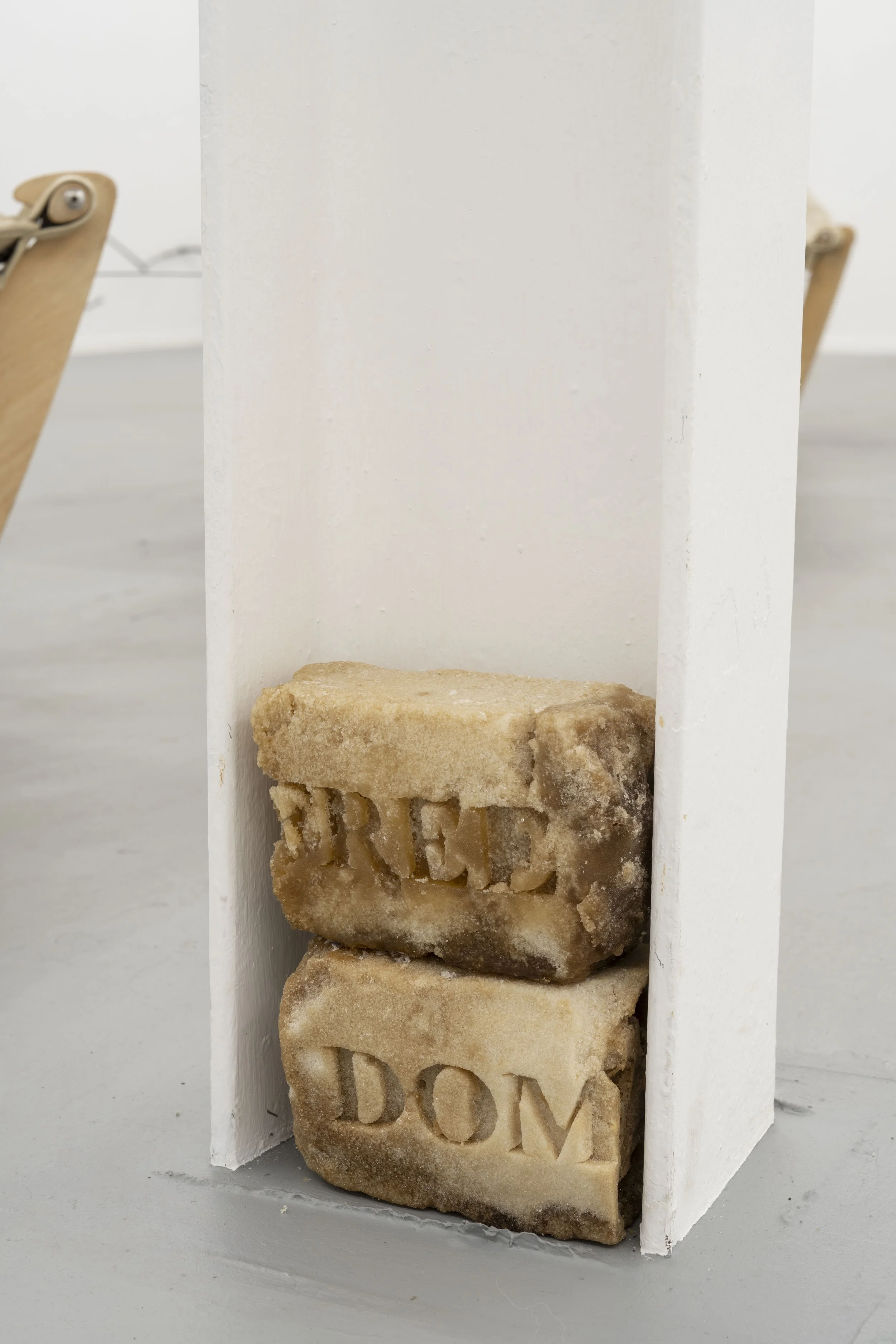


![Jordan Zayas Kelly, Pocket Book[s] (Pluperfect), 2026. Details. Courtesy of the Artist and Loop, London. Photo_ Noah Da Costa(3).jpg](https://images.squarespace-cdn.com/content/v1/67cf135eeb7ae15929952823/e33e12ed-513b-496b-9070-39cbc8012fd5/Jordan+Zayas+Kelly%2C+Pocket+Book%5Bs%5D+%28Pluperfect%29%2C+2026.+Details.+Courtesy+of+the+Artist+and+Loop%2C+London.+Photo_+Noah+Da+Costa%283%29.jpg)

![Jordan Zayas Kelly, Pocket Book[s] (Pluperfect), 2026. Details. Courtesy of the Artist and Loop, London. Photo_ Noah Da Costa(4).jpg](https://images.squarespace-cdn.com/content/v1/67cf135eeb7ae15929952823/61e1fbba-79c5-4c4b-a725-7b33a5cab1c1/Jordan+Zayas+Kelly%2C+Pocket+Book%5Bs%5D+%28Pluperfect%29%2C+2026.+Details.+Courtesy+of+the+Artist+and+Loop%2C+London.+Photo_+Noah+Da+Costa%284%29.jpg)