
RAMZI MALLAT
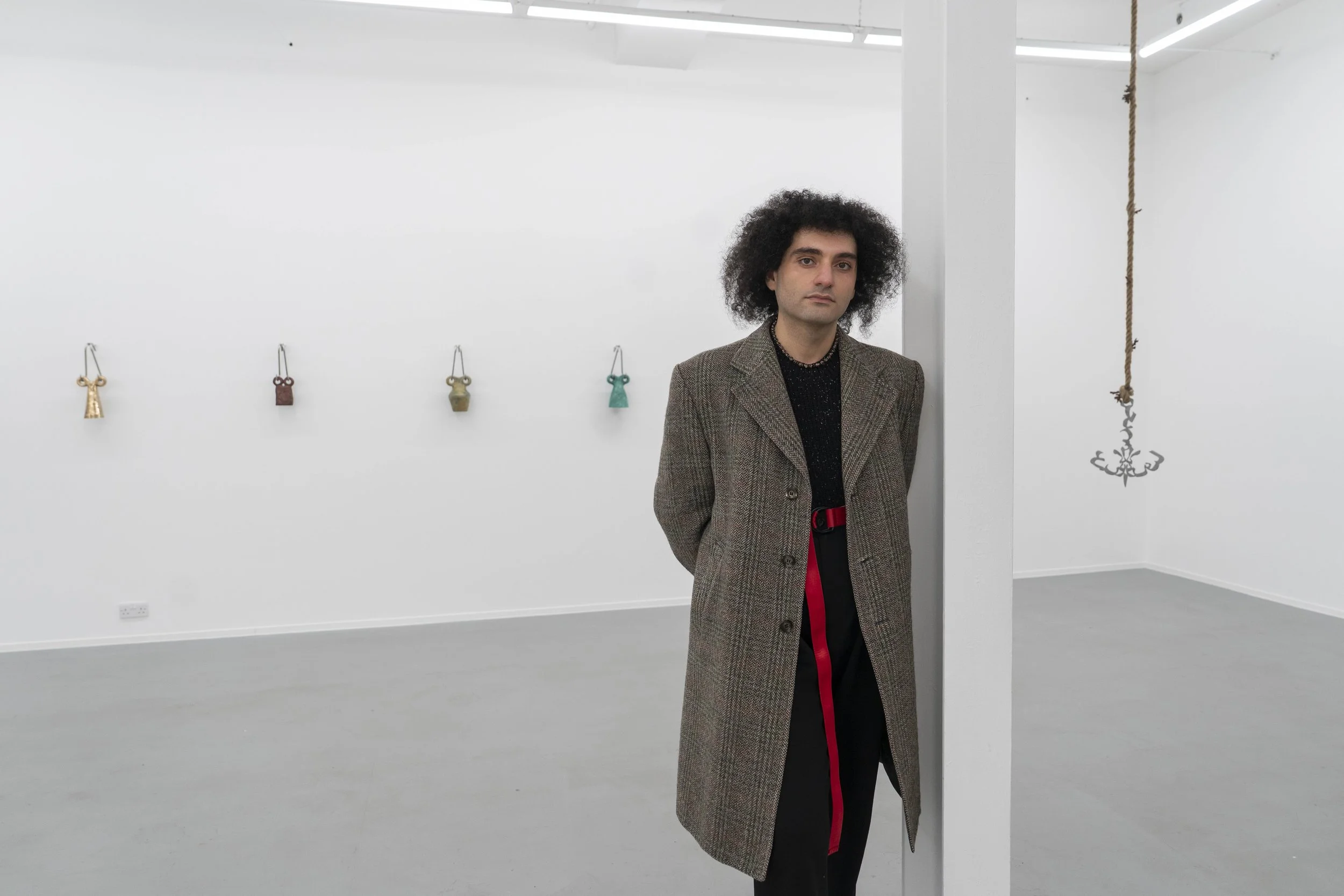
RAMZI MALLAT’s artistic practice epitomises the complexities of cultural identity within our ever-globalised society. Drawing from a rich tapestry of theological and folkloric knowledge from the Levant region, his work challenges the conventional notion of tradition as a civilisational legacy, revealing a narrative constructed by a society’s cultural vanguard in the course of a struggle. The artist reinterprets Levantine traditions, artefacts, and symbols through material experimentation, immersive installations, and socially engaged storytelling.
MALLAT navigates the intricate interplay between capitalism, labour, and everyday life, shedding light on the mechanisms by which meaning is produced within our societies. Through this visual lexicon, the artist forms a nuanced tableau where collective consciousness is challenged by the tumultuous socio-political landscapes faced by nations and individuals alike. Rooted in the investigation of cultural heritage and the unearthing of suppressed historical narratives, his works become tools to defy displacement, expulsion, and the perils of erasure.
In the artist’s practice, history and myth intertwine through the juxtaposition of politics and lived experience, challenging the supremacy of state power by embracing the openness of the future. Across this exploration, he unveils the transformative potential of age-old materials (such as cast bronze, ceramic, and glass), infusing them with contemporary relevance and elevating them to the status of discursive art forms where tradition and innovation coalesce.
RAMZI MALLAT is a multidisciplinary artist based between London and Beirut. He holds a BA in Fine Art from Lancaster University and an MA in Sculpture from the Royal College of Art. In 2022, MALLAT was featured on Forbes Middle East's ‘30 Under 30’ list, and in 2024, he was shortlisted for Bloomberg New Contemporaries. He currently serves as a trustee of the IMOS Foundation (U.K).
Mallat’s work has been presented in solo exhibitions at venues including the UNESCO Palace and The Cervantes Institute in Beirut, as well as the Victoria and Albert Museum, P21 Gallery, Marie Jose Gallery and Danuser and Ramírez Gallery in London. He has participated in group exhibitions across the United Kingdom and Europe, including Turf Projects, Standpoint Gallery, Candid Arts and Storey Gallery, and the VIMA Art Fair (Cyprus). His recent short film Sobhiye (2022) was recognised by multiple international film festivals, including Lebanese Independent Film Festival (LIFF).
APORIA
Thursday 27 November – Saturday 17 January 2026
Project Loop is pleased to present Aporia, a solo exhibition by our fourth resident artist Ramzi Mallat.
To encounter Ramzi Mallat’s Aporia is to enter into an uncertain terrain, where thought, matter and time converge in a state of irresoluteness. Following his residency at Project LOOP, Mallat transforms the philosophical concept of aporia into an artistic exploration.
First used by Plato to describe the moment of profound doubt that follows questioning, the term aporia (from the Greek ἀπορία, meaning “without passage” or “no way through”) was later formalised by Aristotle as a method, a necessary obstruction through which knowledge advances. Centuries on, Jacques Derrida reimagined it as an unpassable threshold, the space where meaning falters and yet must still be faced: “we await one another at the limit of the possible.” (Aporias, Stanford University Press, 1993).
In Aporia, Mallat’s works resist both nostalgia and repair, they dwell instead in what the artist calls a ‘poetics of aftermath’: an aesthetics of instability that reflects the precarity of the times we live in. The artist’s practice evokes this aftermath as a living condition rather than a historical event, an impossibility one must inhabit.
Bringing together sculptures, drawings and prints, the exhibition reflects on a world marked by instability. Mallat’s Adrift (2023), a Mediterranean fishing boat fitted with Levantine mandaloun windows, captures the tension of migration, where opportunity for some becomes danger for others. Through this hybrid form, the artist explores heritage, displacement, and the fragile line between safety and peril. The work stands as an ode to migrants, the anonymous and the unfamiliar, while offering a way to grasp the conflicting forces of the migrant crisis.
Sorrowful and Bellicose (2023), a hanging anchor composed of illegible Arabic text which visually merges the familiar and strange. A jute rope is adorned by copper dendrites in the shape of coral growths, suggesting a repeated submersion in bodies of water. These nautical references symbolise both physical and metaphorical journeys into the sinking unknown, bringing to the forefront themes of erasure, refuge, wreckage and the abyss.
Running through all these gestures is a profound diasporic tension: the question of whether to leave in search of a better future or stay rooted in the place of origin. The artist examines what is lost, what is preserved, and what is continuously re-negotiated when one lives in motion, caught between returning, remaining, or beginning again elsewhere. This emotional conflict is expressed through objects that invoke fragility, protection, and challenge fate.
The result is an exhibition that entwines kitsch tropes with heritage, personal narrative with collective history, and ancient artefacts with forced displacement. Aporia grapples with relentless discord, and enters an immersive narrative that navigates identity, movement, and belonging.

Ramzi Mallat, Constellations of Protection IX, 2023. Polished Bronze, 24 x 16 x 11 cm. Courtesy of the artist and Loop, London. Photo: Noah Da Costa

Installation view: Ramzi Mallat, Aporia, exhibition at Loop, London, 2025. Photo: Noah Da Costa

Installation view: Ramzi Mallat, Aporia, exhibition at Loop, London, 2025. Photo: Noah Da Costa

Ramzi Mallat, Adrift, 2023. Wood and paint, 245 x 45 x 30 cm. Courtesy of the artist and Loop, London. Photo: Noah Da Costa
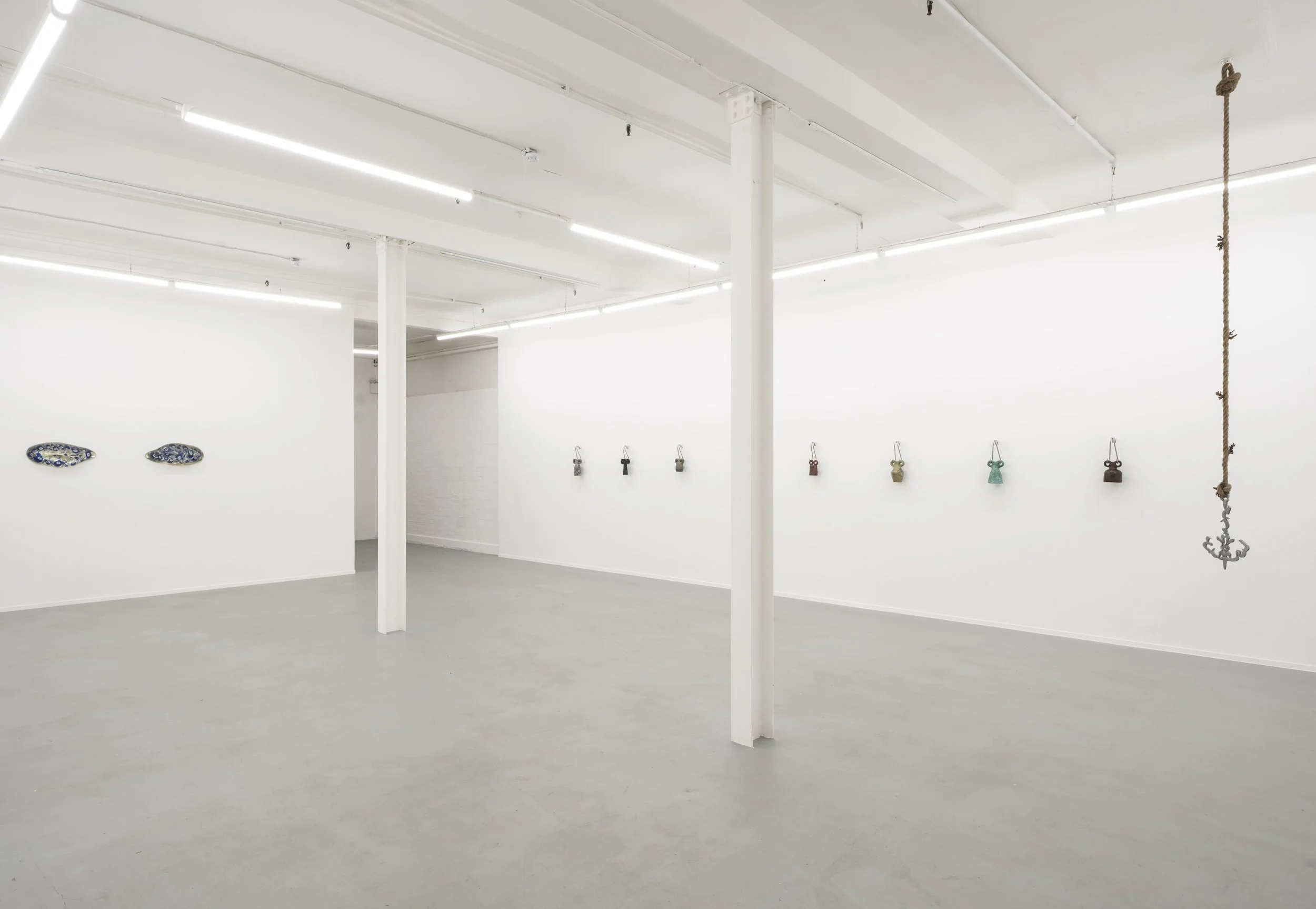
Installation view: Ramzi Mallat, Aporia, exhibition at Loop, London, 2025. Photo: Noah Da Costa

Ramzi Mallat, Constellations of Protection XVI, 2024. Patinated bronze, 26 x 18 x 12 cm. Courtesy of the artist and Loop, London. Photo: Noah Da Costa

Ramzi Mallat, Constellations of Protection X, 2024. Patinated Bronze, 24 x 17 x 14 cm. Courtesy of the artist and Loop, London. Photo: Noah Da Costa

Installation view: Ramzi Mallat, Aporia, exhibition at Loop, London, 2025. Photo: Noah Da Costa

Ramzi Mallat, Vista Visions VIII, 2024. Wax pencil on paper, 119 x 45 cm. Courtesy of the artist and Loop, London. Photo: Noah Da Costa

Installation view: Ramzi Mallat, Aporia, exhibition at Loop, London, 2025. Photo: Noah Da Costa

Ramzi Mallat, Constellations of Protection XV, 2024. Patinated Bronze, 25 x 16 x 12 cm. Courtesy of the artist and Loop, London. Photo: Noah Da Costa

Installation view: Ramzi Mallat, Aporia, exhibition at Loop, London, 2025. Photo: Noah Da Costa

Ramzi Mallat, Billow and Behold, 2023. Glass and resin, 26 x 171 x 16 cm. Courtesy of the artist and Loop, London. Photo: Noah Da Costa

Ramzi Mallat, Constellations of Protection I, 2023. Patinated Bronze, 18 x 12 x 5 cm. Courtesy of the artist and Loop, London. Photo: Noah Da Costa
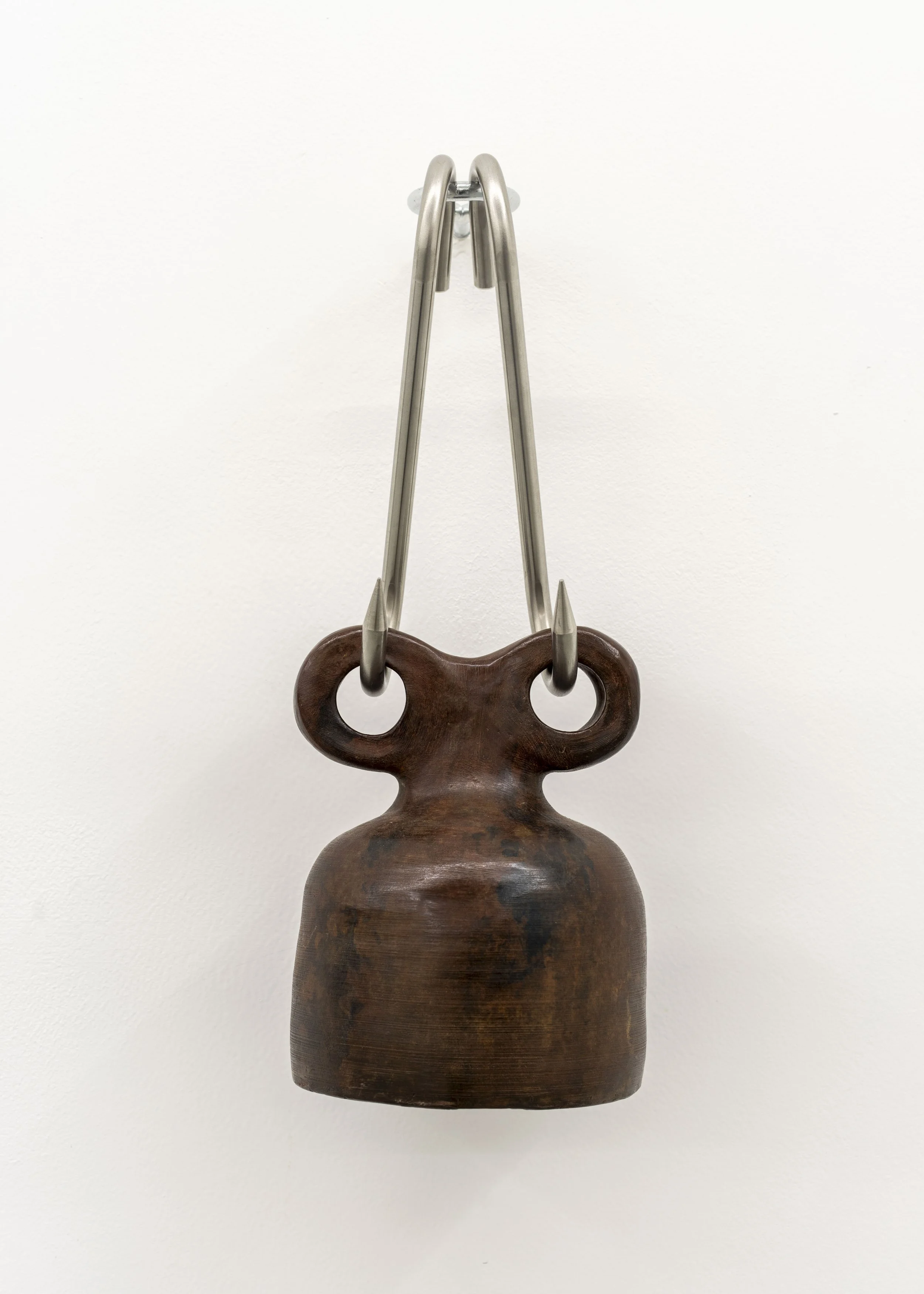
Ramzi Mallat, Constellations of Protection VII, 2024. Patinated Bronze, 20 x 15 x 14 cm. Courtesy of the artist and Loop, London. Photo: Noah Da Costa

Ramzi Mallat, Constellations of Protection XIV, 2024 Patinated Bronze, 18 x 14 x 7 cm. Courtesy of the artist and Loop, London. Photo: Noah Da Costa
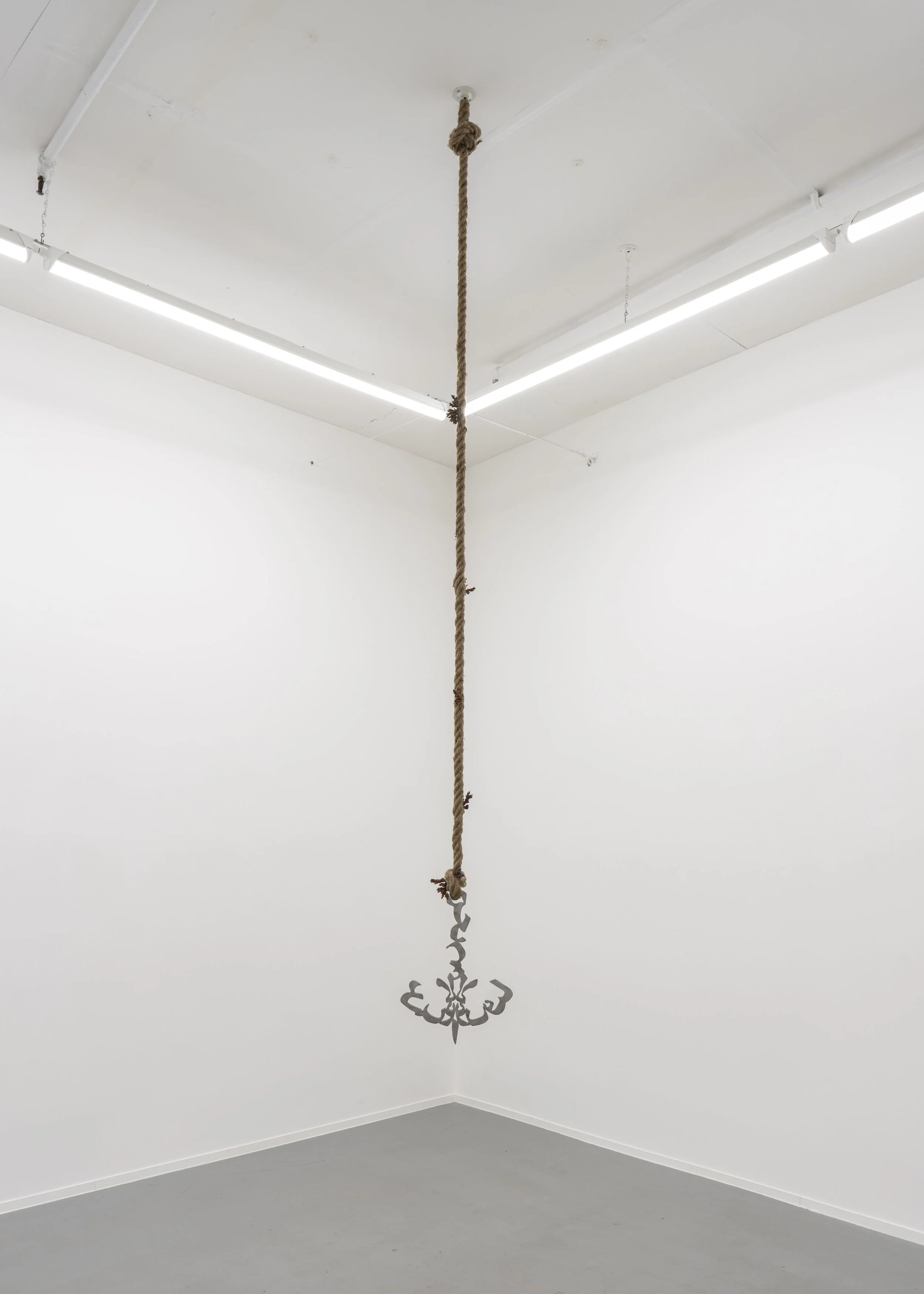
Ramzi Mallat,Vain Sorrowful and Bellicose, 2023. Mild steel, jute rope and copper, 200 x 31 x 7 cm. Courtesy of the artist and Loop, London. Photo: Noah Da Costa

Ramzi Mallat, Constellations of Protection V, 2024. Patinated bronze, 26 x 18 x 12 cm. Courtesy of the artist and Loop, London. Photo: Noah Da Costa

Installation view: Ramzi Mallat, Aporia, exhibition at Loop, London, 2025. Photo: Noah Da Costa